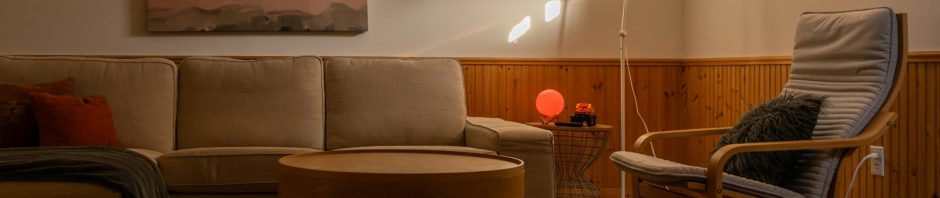
Most rooms feel flat under a single ceiling light. Mixing light sources at different heights makes a space more comfortable and more useful.
The essentials
- Plan three layers: ambient light for the whole room, task light for reading and cooking, and accent light for art and features.
- Shop for bulbs by lumens, which measure brightness, rather than watts, which measure energy use.
- Warm white light, around 2700K to 3000K, feels cozy; cooler white, 4000K and up, feels crisp and suits work areas.
- The Department of Energy says ENERGY STAR-rated LEDs use at least 75% less energy than incandescent bulbs and can last up to 25 times longer.
- Pair dimmable LED bulbs with dimmers designed for LEDs to avoid flicker and buzzing.
A single fixture in the middle of the ceiling lights a room the way a flashlight lights a cave: one bright spot, harsh shadows and dim corners. Designers solve this by layering light, combining several sources at different heights for different jobs. You don’t need to rewire anything to start.
The three layers
Ambient light is the general glow that lets you move around safely. It comes from ceiling fixtures, recessed lights, flush mounts or a ring of lamps.
Task light is focused where you do something: a reading lamp beside a chair, under-cabinet lights over a counter, a desk lamp or lights at the sides of a bathroom mirror.
Accent light adds depth and draws the eye. Think picture lights, a lamp washing light up a wall, or soft lighting on shelves.
A well-lit room usually has at least one of each, on separate switches or dimmers, so you can change the mood without changing the bulbs.
Room by room
- Living room: a ceiling fixture or a few lamps for ambient light, a reading lamp at each main seat and an accent light on art or shelves.
- Kitchen: ambient overhead lighting, under-cabinet task lights so you’re not working in your own shadow, and pendants over an island.
- Bedroom: soft ambient light, bedside lamps for reading, and a dimmer if you can add one.
- Bathroom: lights on both sides of the mirror, or above it, light faces more evenly than a single overhead fixture.
- Hallways and stairs: light the whole length, including the top and bottom of stairs. It’s a safety issue as much as a design one.
Read the bulb label
In the United States, the FTC requires a Lighting Facts label on light bulb packaging. It lists:
- Brightness in lumens
- Estimated yearly energy cost
- Life, the expected lifespan
- Light appearance, from warm to cool, often with a Kelvin number
- Energy used in watts
Watts tell you how much electricity a bulb uses, not how bright it is. Lumens are the number to compare.
Color temperature and CRI
| Color temperature | How it looks | Good for |
|---|---|---|
| 2700K | Warm, like a traditional incandescent bulb | Living rooms, bedrooms |
| 3000K | Warm white, slightly crisper | Kitchens, bathrooms, general use |
| 3500K to 4000K | Neutral to cool white | Workspaces, garages, laundry rooms |
| 5000K and up | Cool, daylight-like | Workshops and task areas |
Color rendering index (CRI) matters too. A low-CRI bulb can make paint swatches, food and skin tones look slightly off. If you’re choosing paint colors, check your samples under the bulbs you’ll actually use. Our paint sheen guide explains why light changes how a wall looks.
Pro tip
Pick one color temperature for each room and stick with it. A mix of warm and cool bulbs in the same space looks patchy, even when each bulb is fine on its own.
LEDs, dimmers and fixtures
LEDs have become the standard choice. The Department of Energy says ENERGY STAR-rated LEDs use at least 75% less energy than incandescent lighting and can last up to 25 times longer.
A few details avoid disappointment:
- Dimming: use bulbs marked dimmable, and check that your dimmer is compatible with LEDs. Older dimmers can cause flicker or buzzing.
- Enclosed fixtures: some LED bulbs aren’t rated for fully enclosed fixtures, where heat builds up. Check the package.
- Smart bulbs: handy for lamps and hard-to-reach fixtures, but they generally need the wall switch left on to stay connected.
Changes you can make without rewiring
- Add floor and table lamps to dark corners.
- Use plug-in wall sconces beside a bed or sofa.
- Fit battery-powered picture lights over art.
- Put lamps on smart plugs or plug-in dimmers.
Anything that involves new hardwired fixtures, switches or circuits should go to a licensed electrician. Once your lighting is sorted, our guide to hanging pictures and mirrors will help you place the art you want to show off.
Common questions
How many lumens do I need?
As a reference point, the FTC’s bulb label example compares a traditional 60-watt bulb with an LED that gives the same 800 lumens on far fewer watts. Brighter tasks need more light; it usually works better to add a lamp than to put one very bright bulb overhead.
What is CRI?
The color rendering index describes how accurately a light source shows colors, on a scale that tops out at 100. Higher numbers make food, skin tones and paint colors look more natural, which matters most in kitchens, bathrooms and closets.
Can I mix color temperatures in one room?
Keeping bulbs in the same room close in color temperature makes the light look consistent. A slightly cooler task light over a kitchen counter or desk can work if the difference isn’t dramatic.
Do I need an electrician to add lighting?
Not for plug-in lamps, plug-in wall sconces or battery-powered picture lights. Adding or moving hardwired fixtures, switches or circuits is a job for a licensed electrician, and it may need a permit where you live.
This guide is general information, not professional advice. Follow the manufacturer’s instructions and your local building codes, and hire a licensed professional for electrical, gas, structural or roofing work.